A Comprehensive Overview to the Different Kinds and Applications of Aluminum Castings
Aluminum castings are vital components in numerous markets, known for their lightweight and durable buildings. Various casting methods, such as sand, pass away, and financial investment casting, offer unique benefits tailored to certain applications. Comprehending these procedures is essential for selecting the right method for a job. Each technique has its unique advantages, influencing layout and production options. The expedition of these methods discloses a deeper understanding into their influence on modern-day production.
Introduction of Aluminum Castings
Aluminum castings are crucial parts in numerous markets, recognized for their light-weight and corrosion-resistant residential properties. These castings are generated via processes that permit complex layouts and high dimensional precision. The flexibility of aluminum makes it a perfect option for a series of applications, from auto parts to consumer electronic devices. Due to its superb thermal and electric conductivity, aluminum is additionally favored in electrical real estates and warm sinks. Aluminum castings can be treated with numerous surface coatings, improving their visual allure and longevity. The material's recyclability includes to its sustainability credentials, making it an eco pleasant choice. Additionally, the schedule of various aluminum alloys enables manufacturers to tailor the mechanical homes to particular needs, giving enhanced stamina or enhanced resistance to wear. Overall, aluminum castings play a substantial duty in modern-day manufacturing, contributing to the performance and efficiency of countless items across varied fields.
Sand Casting: Refine and Applications
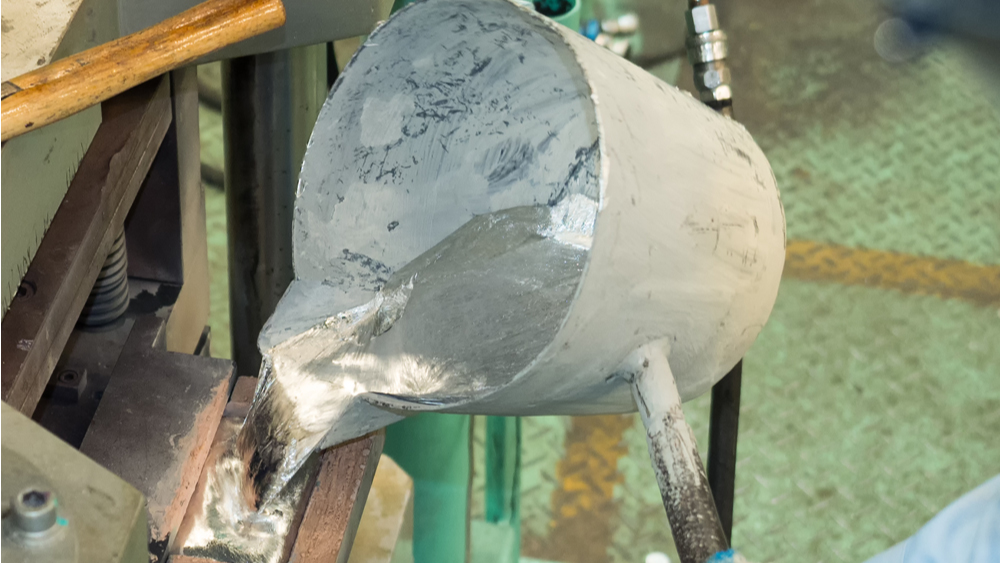
While various casting techniques exist, sand casting continues to be among the most widely utilized strategies as a result of its simpleness and versatility. This procedure entails creating a mold from a combination of sand and a binding agent, permitting the production of complex shapes with high dimensional precision. The aluminum is melted and poured into the mold and mildew, where it takes the preferred type as it cools and solidifies.
Sand casting is especially reliable for producing huge components and low to medium quantity runs, making it appropriate for numerous sectors, including auto, aerospace, and consumer items. Its flexibility permits for the casting of detailed designs, fitting varied specs. In addition, sand mold and mildews can be reused numerous times, enhancing cost-effectiveness. The ease of sourcing products and the relatively low configuration costs additionally add to its widespread adoption. On the whole, sand casting plays a critical function in the aluminum casting landscape, promoting innovation and effectiveness.
Die Casting: Benefits and Makes use of
Die casting offers a number of benefits that make it a recommended technique for creating aluminum parts in different industries. This procedure allows for high-volume manufacturing with outstanding dimensional accuracy and surface coating. The quick solidification of aluminum during die casting leads to a solid and long lasting item, reducing the demand for comprehensive machining or finishing processes.
Furthermore, die casting allows the production of intricate forms and detailed layouts, which can be challenging to accomplish with other casting methods. The efficient use products decreases waste, making it a cost-effective option for suppliers.
Applications of die casting period numerous industries, including automotive, aerospace, and customer electronic devices, where light-weight and high-strength components are essential. Overall, pass away casting stands apart for its ability to supply quality, effectiveness, and adaptability in aluminum part manufacturing, strengthening its duty in contemporary manufacturing techniques.
Financial Investment Casting: Accuracy and Information
Financial investment casting is a precision production process that permits intricate layouts and thorough features in aluminum parts (Aluminum Casting). This method uses many benefits, including high dimensional accuracy and a smooth surface coating. Its versatility makes it suitable across different markets, from aerospace to clinical gadgets
Process Summary
The investment casting process stands apart for its ability to produce complex aluminum elements with amazing accuracy and information. This method starts with developing a wax or polymer pattern that is a reproduction of the wanted component. Next off, the pattern is covered with a ceramic covering, which is then heated to harden. When the covering is set, the wax is dissolved, leaving a dental caries in the covering. Fluid aluminum is poured right into this cavity, filling it to form the final element. After cooling, the ceramic covering is escaped, disclosing the actors part. This procedure enables complex geometries and fine surface area coatings, making it suitable for numerous applications, from aerospace to automobile industries.
Advantages of Financial Investment Casting
One of the primary advantages of financial investment casting lies in its ability to supply high-precision elements with detailed details. This approach enables for the development of complex geometries that are often unattainable via various other casting techniques. Financial investment casting reduces the demand for substantial machining, reducing product waste and production time. Additionally, it makes it possible for making use of numerous aluminum alloys, enhancing the versatility of the final item. The process is defined by a smooth surface area finish, which can result in enhanced performance and looks. Investment casting is well-suited for both little and huge production runs, accommodating a vast array of industries. Overall, its accuracy and efficiency make financial investment casting a recommended option for making components calling for precise specs.
Applications in Industry
While various casting approaches serve certain functions, financial investment casting stands out for its widespread applications throughout several sectors as a result of its unmatched accuracy and detail. This strategy is specifically preferred in aerospace and vehicle fields, where elaborate parts need precise requirements for safety and performance. Investment casting permits the production of intricate forms, such as generator blades and engine parts, that traditional approaches can not accomplish. Furthermore, medical device makers make use of investment casting for creating highly comprehensive tools and implants, ensuring biocompatibility and capability. The electrical and electronics sectors additionally profit, generating components like real estates and connectors that require great resistances. Overall, investment casting's convenience and precision make it a vital procedure in contemporary manufacturing across varied fields.
Contrast of Casting Approaches

Sand Casting Advantages
Sand casting uses a number of benefits over other casting techniques, particularly when it involves adaptability and cost-effectiveness. This technique enables the manufacturing of intricate forms and huge parts without the requirement for pricey tooling. Additionally, the sand used in this process is easily available and inexpensive, making it an appealing alternative for both tiny and big production runs. The capacity to reuse sand advertises sustainability and minimizes material prices. Sand casting suits a selection of aluminum alloys, improving its flexibility for various applications. The procedure is additionally reasonably straightforward, which adds to much shorter preparations and adaptability in production. These variables make sand casting a recommended choice for several sectors seeking reputable and economical services.
Die Casting Efficiency
Although numerous casting approaches are available, die casting stands out for its efficiency, especially in high-volume manufacturing scenarios. go to the website This method employs high-pressure forces to infuse molten aluminum right into a mold, causing rapid cycle times and regular product quality. Compared to sand casting and financial investment casting, pass away casting considerably reduces material waste and permits complex styles with limited tolerances. The capability to create huge quantities of parts promptly makes it suitable for markets such as auto and durable goods. On top of that, die casting can facilitate using more economical alloys, even more boosting its cost-effectiveness. Generally, the performance of die casting makes it a recommended selection for makers aiming to enhance both production rate and quality.
Investment Casting Accuracy
Investment casting is commonly recognized for its extraordinary accuracy in producing intricate shapes and complex details. This method involves developing a wax pattern, which is coated in a ceramic shell, and subsequently dissolved, leaving an exact cavity for liquified aluminum. Contrasted to various other casting techniques, such as sand casting or pass away casting, investment casting provides tighter resistances and a smoother surface finish. This accuracy makes it ideal for applications calling for high accuracy, such as aerospace and clinical device components. While the preliminary arrangement costs might be greater, the long-term advantages include lowered machining demands and regular top quality. Subsequently, investment casting sticks out as a preferred choice for intricate styles and demanding specifications in different markets.
Sector Applications of Aluminum Castings
Aluminum castings play a crucial role across many markets because of their light-weight, corrosion-resistant buildings and excellent strength-to-weight proportion. In the automotive field, aluminum castings are thoroughly utilized for engine parts, transmission real estates, and architectural components, adding to sustain performance and efficiency. The aerospace industry take advantage of aluminum castings in aircraft frames, engine mounts, and indoor fittings, where weight reduction is important.
Furthermore, the customer electronic devices sector makes use of aluminum castings for units and parts, enhancing durability while preserving a streamlined visual. In the construction market, aluminum castings are used in building components, home window structures, and structural assistances, giving strength against weathering. The marine sector prefers aluminum castings for boat hulls check my site and fittings due to their resistance to deep sea deterioration. Generally, aluminum castings provide functional options, satisfying varied demands throughout various applications while maintaining high efficiency and dependability.
Future Trends in Aluminum Casting Innovation
As industries proceed to develop, advancements in aluminum casting modern technology are positioned to reshape making processes and item style. Emerging patterns include the assimilation of automation and synthetic knowledge, improving production and improving quality control. 3D printing is likewise acquiring traction, enabling a lot more complicated geometries and reduced waste, therefore promoting sustainability. Furthermore, the advancement of high-performance alloys is increasing the applications of aluminum castings, enabling industries to fulfill extensive performance requirements.
Another significant pattern is the boosting concentrate on recycling and the round economic climate, with technologies targeted at recycling aluminum scrap effectively. Sector gamers are also spending in smart manufacturing methods, integrating IoT for real-time monitoring and predictive upkeep. Lastly, developments in surface area therapy innovations are boosting the toughness and aesthetic charm of aluminum castings. Collectively, these fads represent a transformative duration in aluminum casting, driving performance, sustainability, and technology throughout various markets.
Regularly Asked Questions
What Are the Environmental Effects of Aluminum Casting Processes?
The environmental influences of aluminum casting procedures consist of greenhouse gas discharges, power usage, and waste generation. These elements add to air and water air pollution, triggering the need for lasting methods and enhanced resource monitoring in the sector.
How Can Aluminum Castings Be Recycled Successfully?
Efficient recycling of aluminum castings includes accumulating scrap, removing impurities, and thawing the aluminum to generate new castings. This process saves power, reduces waste, and lessens environmental impacts, promoting a more sustainable production cycle.
What Is the Regular Lifespan of Aluminum Castings?
The regular life expectancy of aluminum castings differs substantially, commonly enduring between 20 to 50 years depending upon environmental factors, alloy make-up, and application. Their sturdiness makes them ideal for different demanding commercial and structural usages.
Exist Any Type Of Wellness Threats Associated With Aluminum Casting?
Issues regarding health and wellness dangers connected with aluminum casting include potential exposure to fumes and dirt. Prolonged breathing might cause respiratory problems, while skin call can cause irritation. Appropriate safety and security measures are important to minimize these threats.
How Do Aluminum Castings Contrast to Various Other Products in Toughness?
Aluminum castings display a favorable strength-to-weight proportion contrasted to lots of materials, including steel and plastics (Aluminum Casting). They are lightweight yet strong, making them excellent for applications calling for sturdiness without too much weight, such as vehicle and aerospace parts